Your epic character deserves better than cheap polyester. It makes you sweat like a hobbit in Mordor. The right fabrics make all the difference.
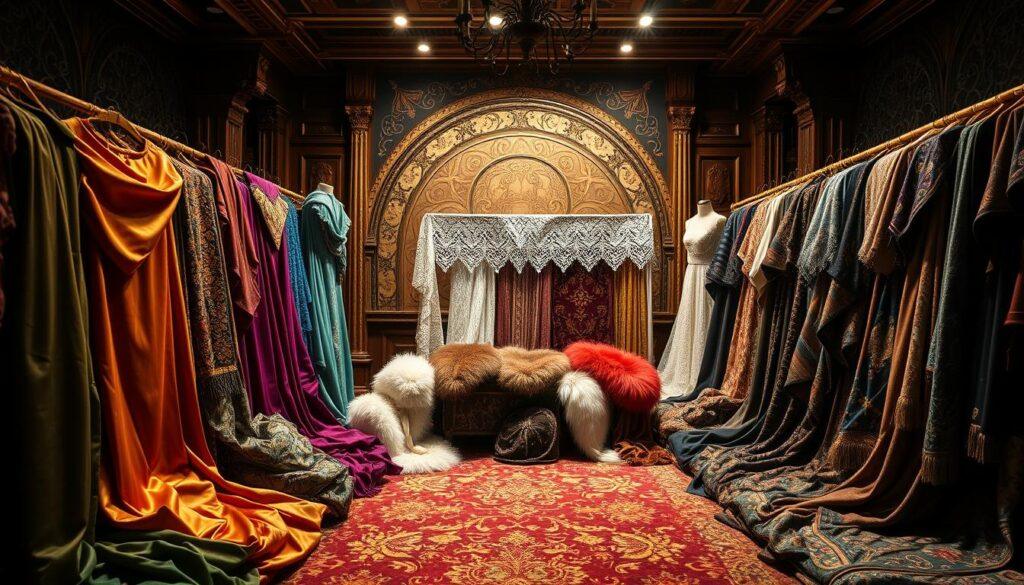
I’ve seen too many fabric disasters at conventions. Velvet that would make Game of Thrones designers cry. Brocade fit for Elven royalty. Organza that floats like magical mist.
We’re exploring the world of fabrics that can make or break your costume. We’ll talk about durability and how to make it look magical.
In the world of cosplay, your fabric choice is key. It can make your costume legendary or laughable. Let’s make sure it’s the former.
Creating Authentic Fantasy Textures
Ever seen a cosplay that looked amazing in photos but felt like cardboard? That’s the texture problem I’m here to solve. The difference between a good costume and a great one isn’t just the price. It’s about how it feels and moves.
Texture turns fabric into mythical textiles that bring your fantasy to life. It’s not about looking expensive. It’s about feeling real.
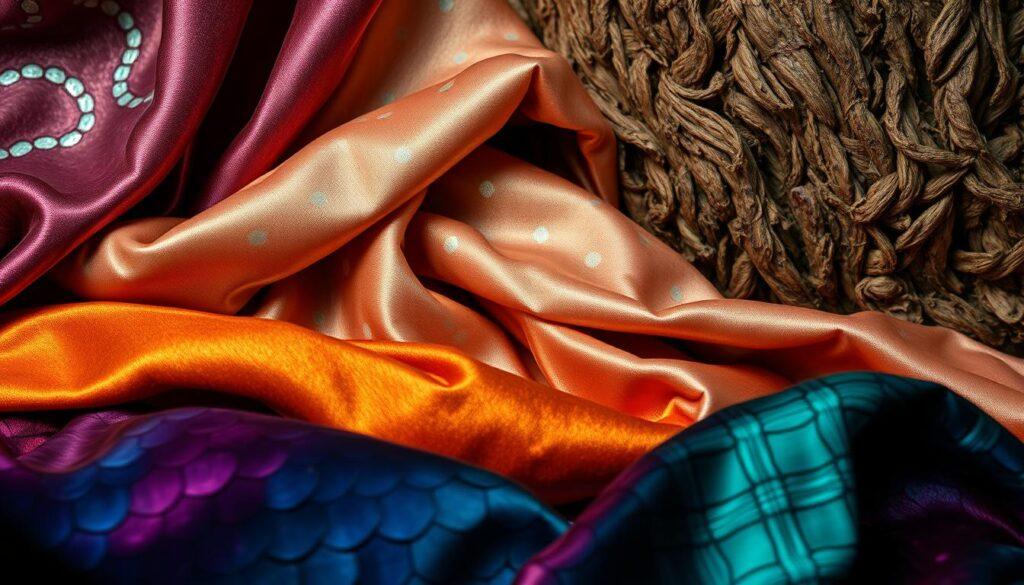
Fabric weight and drape are key. Heavy brocade might look royal but feels stiff. Light chiffon flows well but lacks substance for warrior gear.
“The right drape can make velvet look regal or ridiculous – it’s all in how the fabric behaves, not just how it looks on the bolt.”
Interfacing and lining are your secrets. That gorgeous velvet needs support to stay up. Proper interfacing adds structure without losing movement.
Choosing the right needle and thread is critical. Sewing faux leather with a standard needle can lead to bursting seams. Different fabrics need different tools.
Always test your fabric samples before buying. I’ve seen cosplayers spend a lot on materials that look great online but fail in real life. Test everything before you commit.
Mixing fabrics creates unique textures. Try silk with leather or chiffon over satin. The magic happens when materials complement each other.
| Fabric Type | Best Needle Type | Ideal Interfacing | Drape Quality |
|---|---|---|---|
| Velvet | Ballpoint | Lightweight woven | Medium drape |
| Faux Leather | Leather/Denim | Non-fusible stiff | Low drape |
| Heavy Brocade | Universal | Medium weight fusible | Stiff drape |
| Chiffon | Sharp/Microtex | Sheer tricot | High drape |
The real magic is in understanding how mythical textiles work together. It’s not just about individual pieces. It’s about creating a believable world that feels real.
Remember: texture makes the difference between a Halloween costume and high fashion. Get it right, and people will ask “how did you make that?!”
Combining Fabrics for Effect
Most “fantasy” costumes look like they were made in a chaotic fabric store. True thematic sewing is about choosing fabrics wisely. It’s like creating a visual jazz piece, where each fabric complements the others.
Successful fabric combinations have three key elements: contrast, hierarchy, and practicality. Your materials should be interesting to look at but not overwhelming.
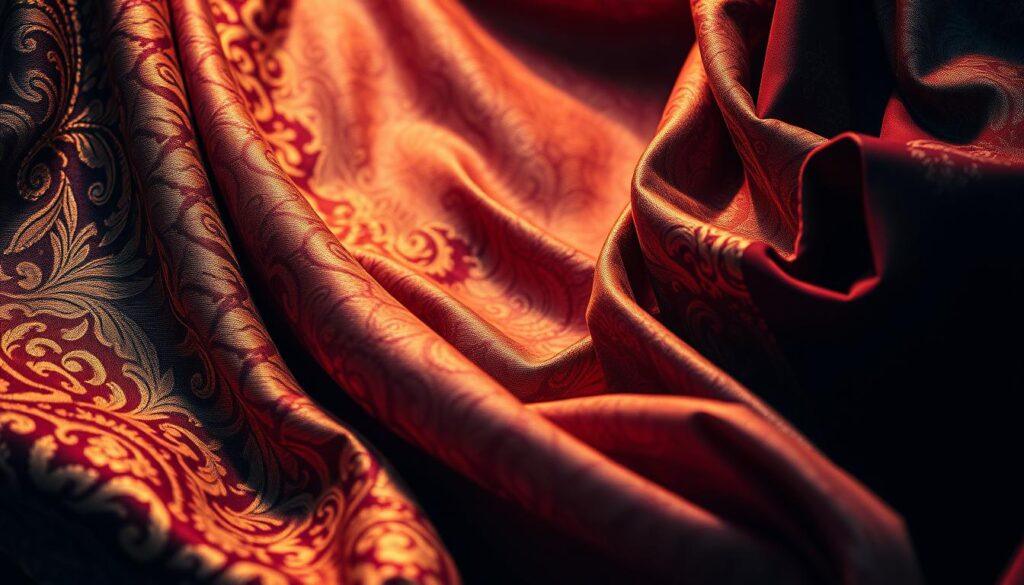
Layering techniques are what set costume artists apart. Start with a base layer for comfort and movement. Then, add more dramatic materials on top. This adds depth without sacrificing wearability.
Here are some great fabric combinations:
- Silk chiffon over matte cotton – perfect for elf designs
- Faux leather accents on wool – adds interest to wizard robes
- Metallic brocade with linen – creates a royal look without being heavy
Texture contrast is key. Mix rough with smooth, matte with shiny, and heavy with light. This makes your costume look great in photos and feel comfortable to wear.
Think about the weather when choosing fabrics. A desert nomad costume in heavy wool is not only uncomfortable but also doesn’t fit the setting. Pick materials that match your character’s environment.
The right fabric combination should tell a story before the wearer speaks a single word.
For props and accessories, balance is key. A delicate dagger needs a sheath that complements it. Think about weight, texture, and color harmony between costume elements.
Remember, the best thematic sewing looks effortless. It’s because someone put a lot of effort into making it. Your fabric choices should enhance the character, comfort, and camera appeal – in that order.
Success Stories
Let me share with you a cosplayer who made armor from bargain-bin taffeta. It looked better than movie props. This is real fabric magic.
I saw a Game of Thrones knight costume that lasted three conventions without a single tear. It was made from double-layered canvas and vinyl. The designer said, “Fantasy fabrics must handle flashes and drunk fans.”
There’s also a wizard robe that won awards. It was made from curtain fabric with metallic thread. The cost? Just thirty dollars and forty hours of sewing.
Costume designers treat fantasy fabrics like military plans. Velvet looks great but attracts dirt. Silk wilts under lights.
One designer’s golden rule is: “Durability beats authenticity when you wear it all day.” She used stretch brocade for an Elven queen costume. It was comfy, breathable, and stunning.
Transformative fabric choices make costumes legendary. I’ve seen:
- Heat-molded plastics for dragon scales
- LED-embedded mesh for glowing wings
- Reinforced lace that looks delicate but holds up
These stories show that smart fabric choices aren’t just about money. It’s about creativity and practicality. The magic is in knowing what works.
Convention veterans know: your fabrics must last through photos, dancing, and spills. A costume malfunction can ruin the magic.
Fabric Tips for Popular Fantasy Themes
Your elven archer needs more than cheap polyester. For a medieval look, go for wool and linen. These materials are like Game of Thrones, not Ren Faire polyester. They breathe well and look historical.
Steampunk inventors need unique materials. Think leather aprons, tweed waistcoats, and copper fabrics. Make sure you don’t look like you shopped at Home Depot.
High fantasy demands special fabrics. Silk for sorcerers, spider silk for dark elves, and fine wools for nobility. Your dark elf assassin should look deadly, not sweaty from vinyl.
Getting the culture right is key. Learn about historical textile practices before designing costumes. Earth tones come from plants, reds from insects, and blacks from squid ink.
The right fabrics make costumes tell your character’s story. Choose materials that show your character’s story through texture and history.