
Imagine a team where everyone is a different character from the same world. Planning matching outfits for your group is a deeply rewarding creative project. It turns a simple event into a story come to life.
The benefits are huge. You get unforgettable photo opportunities and a chance to win costume contests. Plus, your group stands out in a crowded room.
There are many theme ideas to choose from. Think of classic characters like the Addams Family, or movie groups like the Avengers or Frozen. You can also pick the latest pop culture trends. The DIY options are endless.
This guide is more than just a list. It offers a strategic framework for planning perfect, cohesive looks. For a ready-made story, check out PDF bundles with coordinated patterns. Let’s create your storybook squad.
Pick a Tale: themes and moodboards
Before you start, your group must pick a theme. This theme will tie your group costumes together. It’s important to choose something everyone likes, that fits your skills and budget, and that people will recognize.
There are many theme ideas to choose from. You can go for Classic Film and Television like The Addams Family or Harry Potter. Or, pick Modern Franchises like the Avengers or Descendants.
For something different, try Decade-Specific looks like 1920s flappers or 1980s pop icons. Or, pick Abstract Concepts like the Solar System or Board Game Pieces. The goal is to find something that excites everyone and can be made into wearable art.
After picking your theme, it’s time to make a moodboard. This is a collection of images, colors, and textures that shows your project’s look. It turns your group costumes from an idea to a real plan.
Use digital tools like Pinterest or a collage app to make your moodboard. Start by saving images of characters, costumes, and makeup. Then, add colors and fabric samples. This helps answer important questions about style and materials before you spend money.
A physical moodboard works too. Use a poster board and magazine clippings. Putting it together helps everyone see the same vision for texture, shape, and mood. This is key for theme ideas with many characters or complex looks.
Keep your moodboard up to date with new ideas or material choices. It helps avoid mistakes and keeps your team focused. With a clear theme and moodboard, you’re ready to assign roles and develop your characters’ stories.
Role Casting & Character Arcs
Choosing the right roles for your costumes makes your group feel like a real storybook team. This step turns your theme into real people. It makes the experience more fun and authentic for everyone.
Start by thinking about who fits each role best. Who’s the natural leader, the funny one, the smart one, or the grump? Classic group costumes like the Teenage Mutant Ninja Turtles work because each role is filled well. For example, your crabby friend can be “Raphael,” and the tech expert can be “Donatello.”
It’s also important to think about comfort and balance. For themes like The Addams Family, find someone with a flair for drama for Morticia or a serious face for Gomez. Make sure the costume is comfortable for all-day wear. Sometimes, a simple resemblance in height or hair can make casting easier.
Adding depth to your characters can make your photos more interesting. It’s not about writing a book, but agreeing on a basic story for your photos. For example, your Joker might be all about mischief, while your Harley Quinn is all about chaotic love. This shared story makes your photos feel like a real story.
| Casting Consideration | Primary Goal | Practical Example |
|---|---|---|
| Personality Match | Increase authenticity and wearer confidence. | Casting the outgoing friend as “Jack Sparrow” and the quiet one as “Elizabeth Swann.” |
| Comfort & Practicality | Ensure everyone can enjoy the event without costume frustrations. | Choosing a robe-based wizard costume for a member who values mobility over a restrictive armor suit. |
| Visual Resemblance | Leverage natural traits for a more convincing look with less effort. | The tallest person in the group takes the “Hagrid” role in a Harry Potter family costumes set. |
Planning roles carefully makes your group costumes idea come to life. When everyone feels like their character fits them, the whole group shines. This personal touch makes your family costumes and photos truly unforgettable.
Color/Texture Palette & Shared Materials
Color and texture are key to making a group costume look like one story. A mismatched group can seem like a random bunch. But a coordinated group grabs everyone’s attention and tells a single story.
Start by picking a main color palette. Stick to two to four colors. This creates a visual harmony. Think of the icy blues and purples for a Frozen theme or the black and gold for a roaring twenties party.
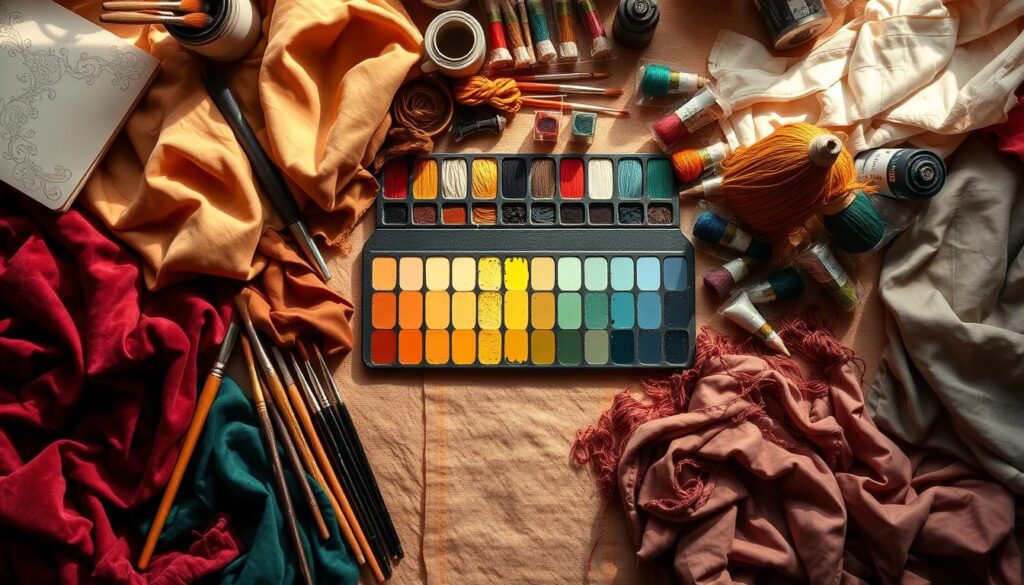
Texture adds depth to your costume. It makes the fantasy come alive. Superheroes need sleek fabrics like vinyl or spandex. Pirates go for rustic materials like burlap and leather. Vampires look elegant in velvet and lace.
Using shared materials is a secret to saving money and looking cohesive. Buying one fabric for many costumes ensures perfect color matching. It also cuts down costs. This is key for groups like the Dora Milaje or the Pink Ladies.
| Theme Inspiration | Core Color Palette | Texture Theme | Suggested Shared Materials |
|---|---|---|---|
| Frozen / Ice Kingdom | Ice Blue, White, Silver, Purple accents | Shimmery, Iridescent, Sheer | Bolt of iridescent chiffon, silver glitter vinyl |
| 1920s Gatsby Party | Black, Gold, Champagne, Emerald | Fringe, Beading, Satin | Gold fringe trim, black feathered boas |
| Care Bears Pastel Rainbow | Pastel Pink, Blue, Yellow, Green | Soft, Plush, Felt | Bulk felt squares, pastel fur fabric |
| Post-Apocalyptic Warriors | Brown, Grey, Olive Drab, Rust | Distressed, Leather, Mesh | Canvas drop cloth for dyeing, faux leather panels |
Use the table as a starting point for your ideas. Each theme combines a mood with color palettes and textures. When you all use the same materials, your outfits become a curated show.
This approach does more than save money. It creates a visual language that makes your group instantly recognizable. Your cohesive look will tell your story before anyone speaks a word.
Master Build Plan, Roles, and Timeline
Imagine you’re the project manager for your family’s fantasy costume. A master build plan is your guide. It turns your ideas into real costumes, avoiding last-minute stress and keeping everyone on track.
A master build plan is like a shared spreadsheet. It tracks everything from fabric to final fittings. It’s your go-to document for all details.
Break down each costume into its main parts. For a group project, clear instructions are key. A simple table format works best.
| Costume Component | Responsible Person | Source (Store/DIY) | Estimated Cost | Status |
|---|---|---|---|---|
| Princess Tunic | Sarah | DIY Sewing | $45 | Fabric Ordered |
| Knight’s Chest Plate | Mark | Etsy Purchase | $80 | Awaiting Shipment |
| Wizard’s Staff | Alex | DIY Craft | $25 | In Progress |
| Group Cloaks (x4) | Team Effort | Fabric Store | $120 | Not Started |
Assign roles based on skill and interest. The sewing expert handles the complex parts. The crafty person can focus on props and accessories.
Use a backward-planned timeline to stay on track. Start with the event date and work your way back. Set deadlines for each phase.
- Finalize All Designs: 8 Weeks Out
- Order All Materials & Purchased Items: 6 Weeks Out
- Complete Major Sewing/Construction: 4 Weeks Out
- First Full Group Fitting: 3 Weeks Out
- Final Alterations & Details: 2 Weeks Out
- Packed & Ready Day: 1 Week Out
This schedule includes a buffer for unexpected delays. It makes the deadline feel achievable.
Add a task tracker to your plan. Use a separate tab in your spreadsheet. List every task, who’s doing it, and when it’s due.
A dynamic task tracker shows progress. Use colors for “Not Started,” “In Progress,” and “Complete.” It motivates the team and spots problems early.
For iconic themes, check out Star Wars group Halloween costumes ideas. They’re great for character roles and plan components.
The project manager updates the plan weekly and shares changes. Hold regular check-ins to review the task tracker. Celebrate small victories to keep spirits high.
This method turns costume making into a fun, team effort. Your master build plan and timeline are the keys to success.
Fittings, Alterations, and Wear Tests
Skipping the fitting and testing phase is a big mistake. It can ruin a perfect costume plan. This stage makes your creations wearable and functional for your group.
Plan a full group fitting session two to three weeks before your event. This allows for enough time for adjustments. Everyone should try on their outfits together. This is your chance to see how everything looks together and check sizes.
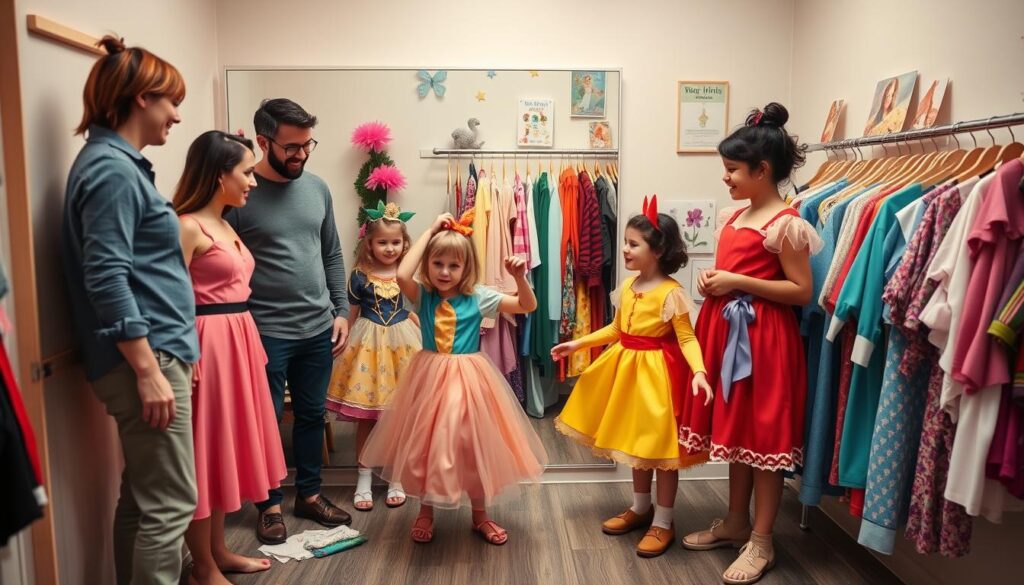
Look for any color mismatches or characters who look too similar. Common changes include hemming pants or skirts for safety. You might also need to take in baggy sleeves or adjust straps for a better fit. Make sure all closures work well.
After making changes, do individual “wear tests.” This step is essential. Each person should wear their costume and accessories for 30-60 minutes at home.
During the wear test, focus on these important points:
- Mobility: Can you move freely, sit, walk, climb stairs, dance, or use the restroom?
- Comfort: Are there any itchy tags, rough seams, or tight spots that will be uncomfortable?
- Durability: Are any parts of the costume fragile? Fix loose appliqués, weak stitches, or delicate attachments now.
- Temperature: Does the costume make you too hot or too cold?
This is very important for family costumes with kids. A child who’s not comfortable won’t have fun. Make sure costumes are easy to layer and consider their shorter attention span. Designing for comfort is key to inclusive design for kids’ costumes.
Spending time on fittings and wear tests is worth it. It prevents last-minute problems. Your group will be confident, comfortable, and ready to enjoy the magical experience you’ve created together.
Logistics: transport, quick changes, weather plans
Execution day is all about putting your plan into action. It’s about moving, changing, and adapting your creations. A forgotten prop or a damaged costume can ruin weeks of work. This section gives you a practical checklist to make sure your team looks great and is ready for anything.
When moving costumes, think ahead. Use garment bags or plastic bins with padding for big items. Take apart props if you can. Pick one vehicle as the “costume cargo van” and plan how to load it to save space and avoid wrinkles.
Wardrobe malfunctions can ruin the event. A shared quick-change kit is like a first-aid box. It should have safety pins, double-sided fashion tape, a mini sewing kit, scissors, and extra fasteners. Don’t forget a portable steamer or wrinkle-release spray for last-minute fixes.
Weather can be unpredictable. You need a plan for cold, rain, and heat. For cold, wear thermal base layers that hide under costumes. For rain, use waterproofing spray and pack ponchos. In heat, choose breathable fabrics and include cooling towels in your packing list.
The table below is your master group costume packing list. Give each team member a copy so nothing gets left behind.
| Item Category | Specific Items | Purpose & Notes |
|---|---|---|
| Transport & Protection | Garment bags, plastic bins, bubble wrap, packing tape, foam padding | Prevent damage during transit. Bins are ideal for wet weather. |
| Quick-Change & Repair | Safety pins, fashion tape, mini sewing kit, scissors, extra buttons/hooks, portable steamer | Handle emergencies and adjustments on-site. Keep in a central, accessible bag. |
| Weather Contingency | Thermal base layers, waterproofing spray, compact ponchos, sunscreen, battery-powered fans, cooling towels | Adapt to forecast changes. Layering is key for temperature swings. |
| Essential Extras | Water bottles, snacks, touch-up makeup, personal ID/cash, a copy of the master timeline | Maintain energy and access. Hydration is key, even in full costumes. |
Final preparation turns a great idea into a flawless event. With a clear packing list and roles for carrying items, your group can enjoy the experience. For more group costume inspiration and theme ideas, exploring different stories can help plan your logistics better from the start.
Group Photo Direction & Posing
Great photos are not just luck; they’re the result of your hard work. Many agree that this is the best part of a group costume project. To get the most out of your effort, you need a solid photoshoot plan.
Plan your photoshoot before the big event or when things slow down. This way, you can focus on capturing your vision without distractions. A well-planned shoot ensures you get amazing photos.
Look for locations that match your theme. A forest is perfect for elves, while an alleyway works great for cyberpunk groups. The right setting adds depth and authenticity to your photos.
Lighting is key. For fantasy, use the soft glow of golden hour. For horror, go for harsh shadows. These choices can make any scene magical or suspenseful.
A good photoshoot plan includes a shot list. Don’t leave poses to chance. Share this list with your photographer and team before the shoot.
- Classic Group Arrangements: Show unity with a front row, staggered lineup, or candid shot. These highlight your costumes.
- Dynamic Action Shots: Bring your characters to life. Capture magic spells, sneaky moves, or heroic acts. These tell your story.
- Individual Portraits: Show off each person’s unique style. These are great for social media and celebrating individual talents.
Give clear directions to your group. Instead of “look natural,” say “glance over your shoulder” or “stand tall like a queen.” This brings out genuine expressions.
By focusing on direction, you turn a fun project into a professional piece. You get proof of your team’s creativity and teamwork. The final album is your group’s trophy.
Budget Sheet + Task Tracker Templates
Turning your fantasy into reality needs more than just creativity. It also needs a solid budget sheet and task tracker. These tools help move your group costume from dream to reality. They bring clarity, avoid misunderstandings, and keep everyone on the same page from start to finish.
A detailed budget sheet is your financial guide. It tracks every expense, from big fabric orders to small details like glitter. This clear tracking is key for shared costume projects.
Your template should have columns for item description, cost, who bought it, and payment status. This makes spending clear and easy to follow.
Here are some common items for a fantasy costume project budget:
| Category | Example Items | Budget Notes |
|---|---|---|
| Materials | Fabric, foam, worbla, paint, trim | Buy in bulk for group discounts; account for waste. |
| Tools & Supplies | Hot glue guns, sewing needles, cutting mats | Often a one-time purchase shared by the group. |
| Accessories | Wigs, prosthetics, jewelry, weapons | Research rental vs. purchase options. |
| Logistics | Transportation, storage bins, convention tickets | Easy to overlook but critical for day-of success. |
Talk about how to handle shared expenses early on. Will one person buy and get reimbursed? Is there a shared fund? Writing this down avoids awkward talks later.
The task tracker manages time and people. It breaks down your master plan into tasks with deadlines. It answers: Who is doing what, and by when?
A simple task tracker template includes:
- Task: A specific, actionable item (e.g., “Dye all leather pieces brown”).
- Assignee: The person responsible.
- Due Date: A clear deadline that fits into your timeline.
- Status: Columns for Not Started, In Progress, For Review, and Done.
This tool creates accountability and shows progress. When tasks are assigned and visible, no one feels overwhelmed. It turns a big project into small, achievable steps.
These templates give your group power. They replace guesswork with strategy and chaos with planning. By spending a little time on these tools, you can focus on the magic, not the management.
Aftercare & Storage
The event day ends, but your costume project’s lifecycle continues. A proper post-event strategy protects your investment. It ensures these creations become lasting treasures.
Start with careful aftercare. Spot clean delicate fabrics like satin or velvet. Hand wash sturdy cottons in cold water. For EVA foam or worbla armor, wipe with a damp cloth.
Always air dry components away from direct heat to prevent damage.
Smart storage preserves costumes for future conventions or as memorabilia. Use breathable garment bags for fabrics. Store props and accessories in labeled Sterilite bins.
Creating a detailed packing list for your storage boxes keeps every piece organized. This makes it easy to find next season.
Your project management tools remain useful. Adapt your shared task tracker to schedule aftercare duties. For example, “dry clean capes” or “condition leather pieces.” This systematic approach ensures no detail is forgotten.
Treating costumes with care extends their story. Proper cleaning and organized storage in a cool, dry place safeguard the group’s effort. You build a wardrobe ready for an encore performance or a display of cherished memories.