
How to Choose the Right Dress-Up Costume for Your Child
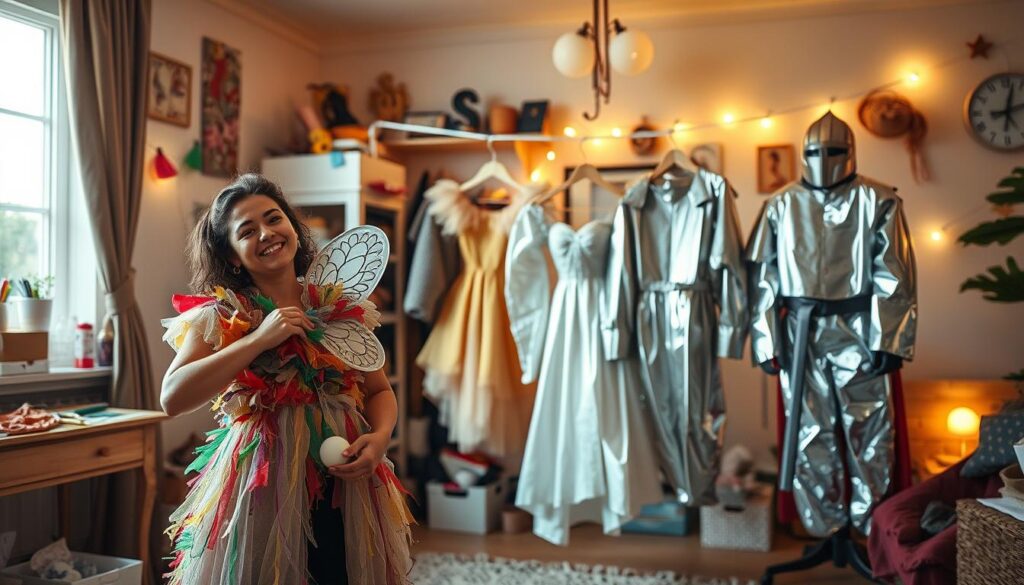
Choosing the right dress-up costume for your child is a fun and exciting task. It’s a chance to encourage their creativity and imagination. Here are some tips to help you pick the perfect costume:
Consider Their Interests
Start by thinking about your child’s interests and hobbies. Are they into superheroes, princesses, or animals? Choosing a costume that aligns with their passions can make them feel more excited and engaged.
Choose Comfortable and Durable Materials
Make sure the costume is made from comfortable and durable materials. Look for costumes made from breathable fabrics like cotton or polyester blends. Avoid costumes with small parts or loose threads that could pose a choking hazard.
Consider the Occasion
Think about the occasion or event your child will be wearing the costume for. If it’s for a specific theme party or holiday, choose a costume that fits the theme. If it’s for everyday play, consider a more versatile costume that can be worn multiple times.
Check for Reviews and Ratings
Before making a final decision, read reviews and check ratings from other parents. Look for feedback on the quality, comfort, and overall satisfaction with the costume. This can give you valuable insights and help you make an informed choice.
Encourage Creativity
Remember, dress-up costumes are all about encouraging creativity and imagination. Encourage your child to express themselves and have fun with their costume choices. Let them explore different characters and themes to discover their own unique style.
By following these tips, you can find the perfect dress-up costume for your child. Whether it’s for a special occasion or everyday play, a well-chosen costume can bring joy and excitement to their imaginative adventures.
| Benefits of Dress-Up and Language Skills | Benefits of Dress-Up and Language Skills |
|---|---|
| 1. Encourages creativity and imagination | 1. Enhances language skills |
| 2. Develops role-playing skills | 2. Improves communication |
| 3. Fosters empathy and understanding | 3. Expands vocabulary |
| 4. Develops problem-solving skills | 4. Enhances storytelling abilities |
| 5. Encourages exploration and discovery | 5. Develops critical thinking |
How to Choose the Right Dress-Up Costume for Your Child
Choosing the right dress-up costume for your child is a fun and exciting task. It’s a chance to encourage their creativity and imagination. Here are some tips to help you pick the perfect costume:
Consider Their Interests
Start by thinking about your child’s interests and hobbies. Are they into superheroes, princesses, or animals? Choosing a costume that aligns with their passions can make them feel more excited and engaged.
Choose Comfortable and Durable Materials
Make sure the costume is made from comfortable and durable materials. Look for costumes made from breathable fabrics like cotton or polyester blends. Avoid costumes with small parts or loose threads that could pose a choking hazard.
Consider the Occasion
Think about the occasion or event your child will be wearing the costume for. If it’s a Halloween party, you may want to choose a more elaborate and themed costume. For everyday play, a simpler and more versatile costume may be a better choice.
Encourage Creativity
Encourage your child to express their creativity and imagination when choosing a costume. Let them pick out accessories and props to go along with their costume. This can help them feel more involved and excited about their dress-up experience.
Consider the Age and Size
Make sure the costume is appropriate for your child’s age and size. Look for costumes that are designed for children in your child’s age range. Check the sizing chart to ensure a proper fit and avoid any safety hazards.
Read Reviews and Check the Brand
Read reviews from other parents to get an idea of the quality and comfort of the costume. Look for reputable brands that specialize in children’s costumes. This can help you make an informed decision and ensure a positive dress-up experience for your child.
By considering these factors, you can choose a dress-up costume that will bring joy and excitement to your child’s playtime. Encourage their creativity and imagination, and watch as they transform into their favorite characters.
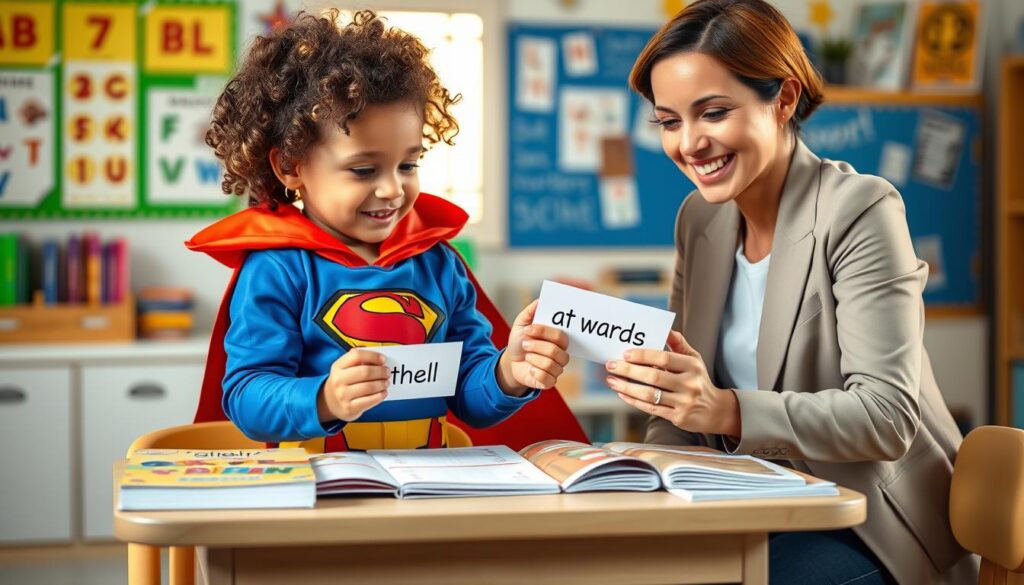
Remember, dress-up and language skills go hand in hand. Through storytelling and role-playing, your child can develop their language skills while having fun. So, embrace the world of dress-up and watch your child’s imagination soar!
Dialogues through dress-up
Monologues are old news; the real magic starts when a cape is put on and a dialogue begins. Dress-up play turns vocabulary into a team effort. It moves from naming things to creating shared realities. This way of Dress-up language learning boosts social understanding.
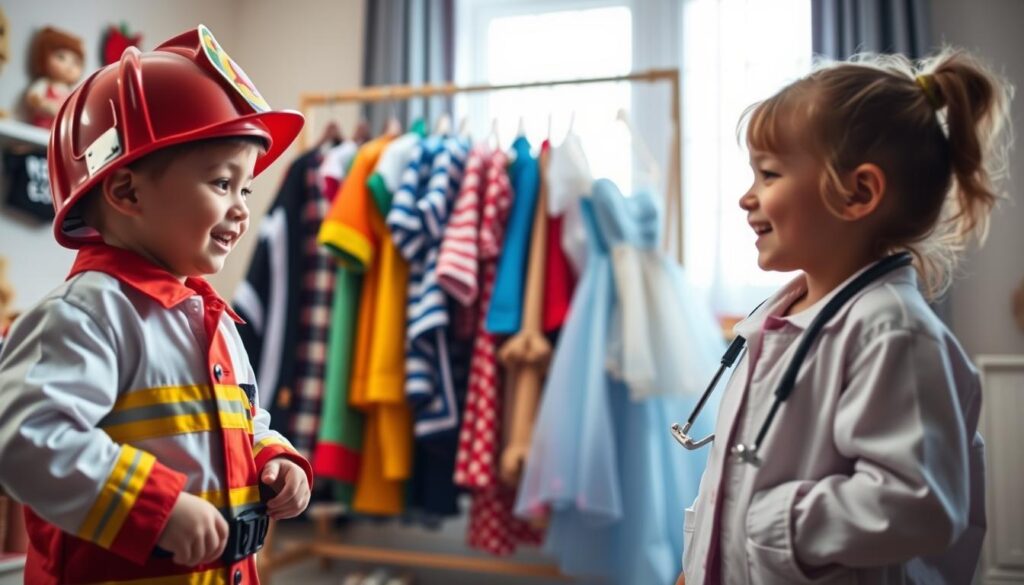
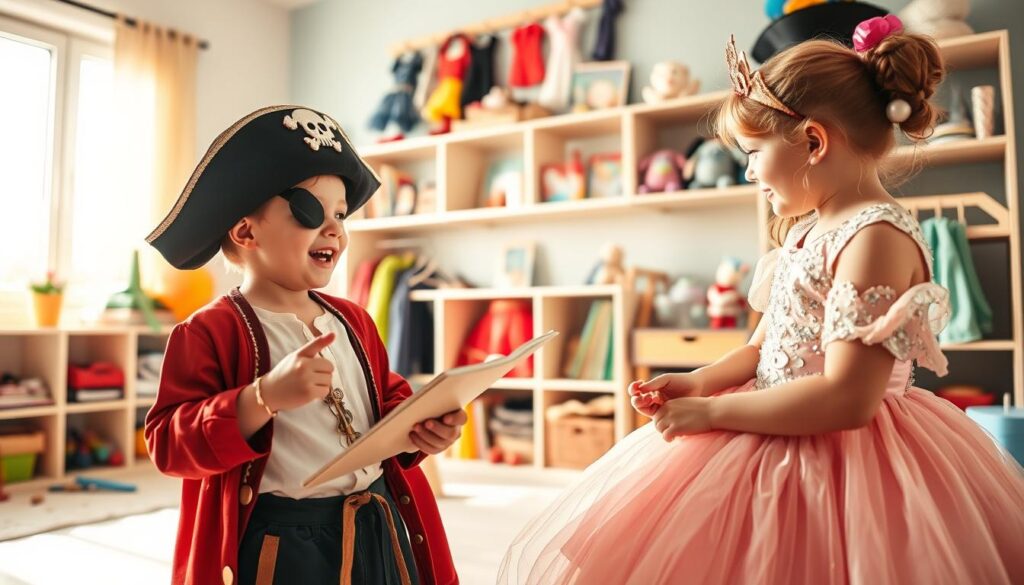
Watch kids decide who’s the pirate captain and who’s the deckhand. Their talk is about who’s in charge, not just their costumes. They’re making a secret agreement, using words to decide roles and scenes.
Role-Play as Social Syntax
When a child says, “You be the patient, and I’ll be the doctor,” they’re doing more than casting roles. They’re starting a complex conversation of social scripts. The language changes from simple statements to actions. This is where Dress-up language learning really shows its worth.
Kids try out different voices—the serious tone of a judge, the bold voice of an astronaut. Each costume lets them test out different ways of speaking. As one source says, this play is about trying out different social and emotional roles, teaching cooperation and empathy.
This play builds empathy through conversation. Kids learn that others think differently. This is the start of all meaningful talks.
Negotiating the Rules of the Imaginary Realm
Then, the playroom politics kick in. Is the dragon friendly or scary? Can the superhero’s powers work underwater? These discussions are serious talks about who’s right.
Children learn to state their opinions and defend them. They find ways to agree. It’s like the UN Security Council, but with more sparkles and maybe a cardboard sword. This teamwork turns disagreements into a shared story.
Studies show that linking dress-up to literacy and empathy helps kids understand deeply. Debating if a dinosaur eats pizza is more than just fun. It’s learning to negotiate.
These skills are key, as shown in resources on the benefits of dress-up play. In the end, Dress-Up and Language Skills go hand in hand. The costume box helps build not just characters, but also skilled communicators.
Parent prompts for creative talk
So, the theory is solid. But in the trenches of after-school exhaustion, how do you, the adult, become the co-writer? It requires a software update for your conversational operating system.
Moving Beyond “What Did You Do Today?”
That question is a linguistic cul-de-sac. Use the dress-up scenario as your interview script. You’re not asking for a debrief; you’re prompting the next episode.
Ask the pirate about her treasure map’s missing piece. Inquire what spell the wizard is brewing. This validates their world and pulls complex storytelling directly from their imagination.
The Art of the Open-Ended Prop
This is where dress-up and language skills truly fuse. A prop isn’t just an object; it’s an unscripted prompt. Leave a blank “captain’s log” with a toy ship.
Add a “mysterious artifact” (a weirdly shaped rock) to a knight’s ensemble. These items are narrative landmines, inviting explanation and plot. As noted in guides on creative play, your job is to follow their lead.
Narrate their actions to model syntax, and ask open-ended questions about their choices. That old remote control isn’t broken; it’s an intergalactic communicator with a secret message. Your role is the curious NPC, ready to offer the side quest.
This approach transforms play into a dynamic workshop for storytelling and verbal confidence.